


i-frame Simplifies Enterprise Transformation with Framework Architecture
A framework is a predefined, reusable, standardized set of structure and rules to solve a specific problem or facilitate a software development process.
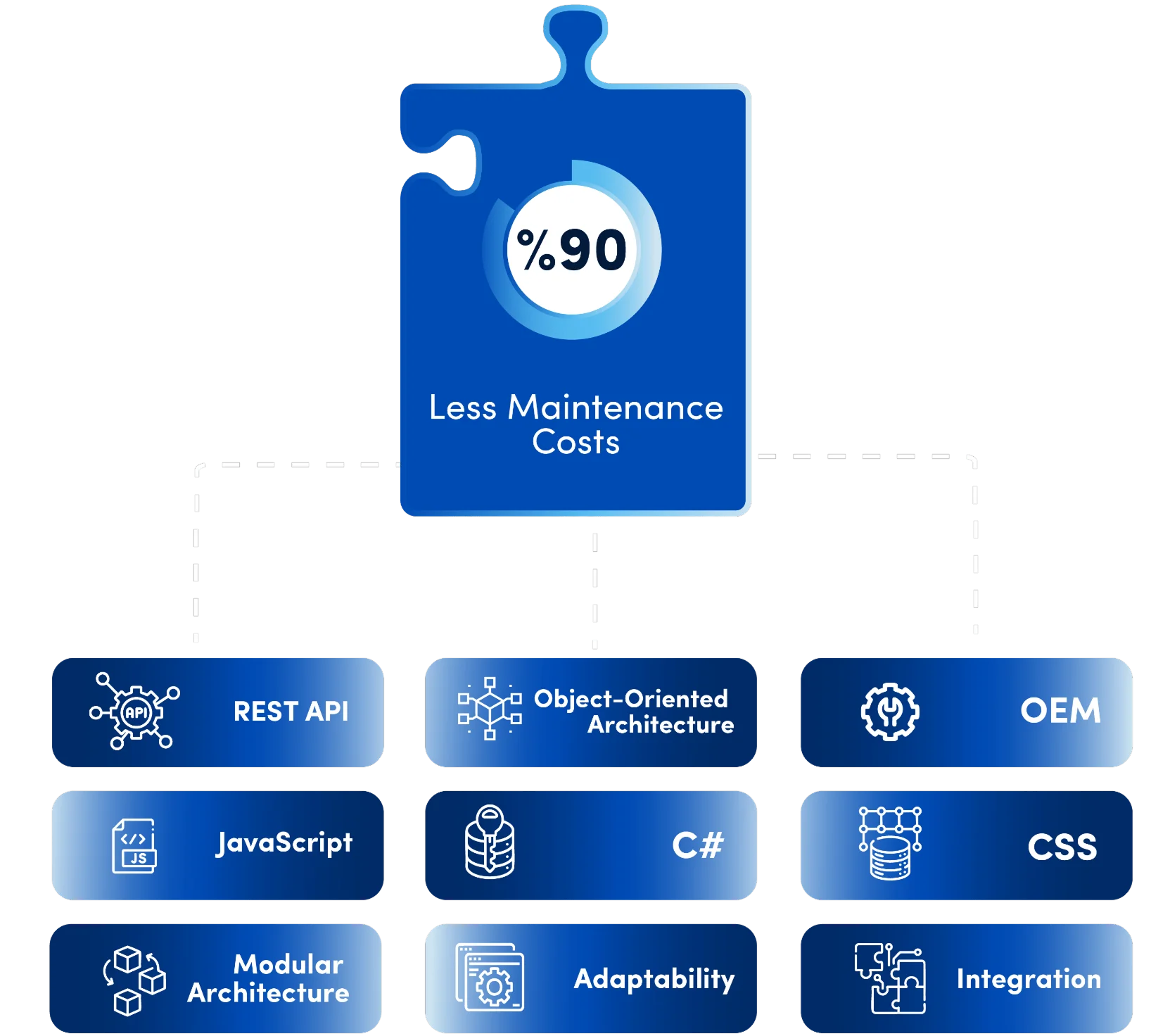
The Difference Between Traditional Methods and i-frame
Starting coding from scratch carries the risk of building standards changing with each team, unsustainable system architectures, duplication of effort and high dependency. These approaches both lengthen lead times and cause technical debt to accumulate. In addition, each time a new developer joins the project, they spend extra time understanding the architecture.
How i-frame Transforms This Process
i-frame not only provides a framework; it integrates this framework with a low-code approach. In other words, it gives both direction and freedom to the developer. This way:
- Software architecture is standardized at enterprise level,
- Modular, sustainable applications are developed without incurring technical debt,
- Facilitates knowledge transfer across the organization
Empowering businesses with Framework solutions.
Ease of Use and Integration Capability
| Feature | Traditional Methods | i-frame |
|---|---|---|
| Code Consistency | Varies by developer | Standardized at the corporate level |
| Project Startup Speed | Requires starting from scratch | Quick start with ready-made objects and building blocks |
| Integration Capability | Code-dependent | REST API + ready-made adapters |
| Architectural Sustainability | Weak | Object-oriented and modular structure |
| Learning Curve | High | Guiding structure that helps make sense of information |
| Intra-team Knowledge Transfer | Difficult | Facilitated with a common framework |
Speed. Flexibility.
Integration.
Key Features
Object Oriented Structure
Each component is defined, not dependent.
Layered Architecture
Form, process, data, access and view are decoupled.
Reusability
Ready-made flows, templates and integrations can be reused in different projects.
Extensibility
JavaScript, C#, CSS supported custom components can be developed. Thanks to the use of the code library, there is no need to modify existing modules to add new features, only additional components are defined.
Guiding Documentation
Everything developed on the platform is supported by structures that can be documented and shared with others.
Adaptability
Separate interface experience for business unit, developer and admin roles.

Where is i-frame used?
- Enterprise data applications
- Field/operation systems
- Sectoral vertical solutions (e.g. cement, mining)
- Process and document management systems
- Modular product infrastructure (OEM)
- The combination of framework + low-code enables rapid adoption in both industry-specific solutions and horizontal enterprise applications.
Who is using it?
- Enterprise Software Teams: Engineering teams looking to reduce technical debt
- Product Owners / Project Managers: Business unit leaders who want rapid prototyping and sustainable delivery
- Startups and ISVs: Startups that want to build modular, brandable, updatable products

Advantages of Using i-frame
- Ensures institutionalization and transferability of knowledge
- Apps grow with modules, not written from scratch
- Reduces development time, reduces technical debt
- Prevents architectural bugs, maintains code standard
- Integration between different applications becomes easier
- Provides architectural integrity between the digital assets of the organization
- With unlimited development flexibility, organizations can even build their own products on the platform and bring them to market.
This makes i-frame not just a tool, but a strategic technology investment.